

Starwood REIT losses have caught many of us off guard. This article explains what Starwood Real Estate Income Trust is and why it’s facing recent challenges, including liquidity issues and redemption limitations.
Investing in non-traded REITs like Starwood carries risks due to their illiquidity, which means we might not access our capital when we need it the most. Some of us could be holding onto these investments longer than expected, impacting our financial plans.
We know that many investors are just now learning about the financial downsides of putting money into non-traded REITs years after their initial investment. To manage withdrawal requests, Starwood has even had to use its credit line to address liquidity concerns.
These operational challenges and pressures raise questions about potential investment fraud within this sector. Haselkorn & Thibaut has been leading the charge for investors and offers a free consultation on loss recovery options.
Interest in how well Starwood performs remains high among investors and stakeholders alike. We’re all looking for information on its fact sheet, news updates, investor relations, and questioning whether its hotel portfolio is a good investment option right now.
This guide walks us through the steps to take if we’re dealing with losses from investing in Starwood REIT. It’s time to take action.
Key Takeaways
Table of Contents
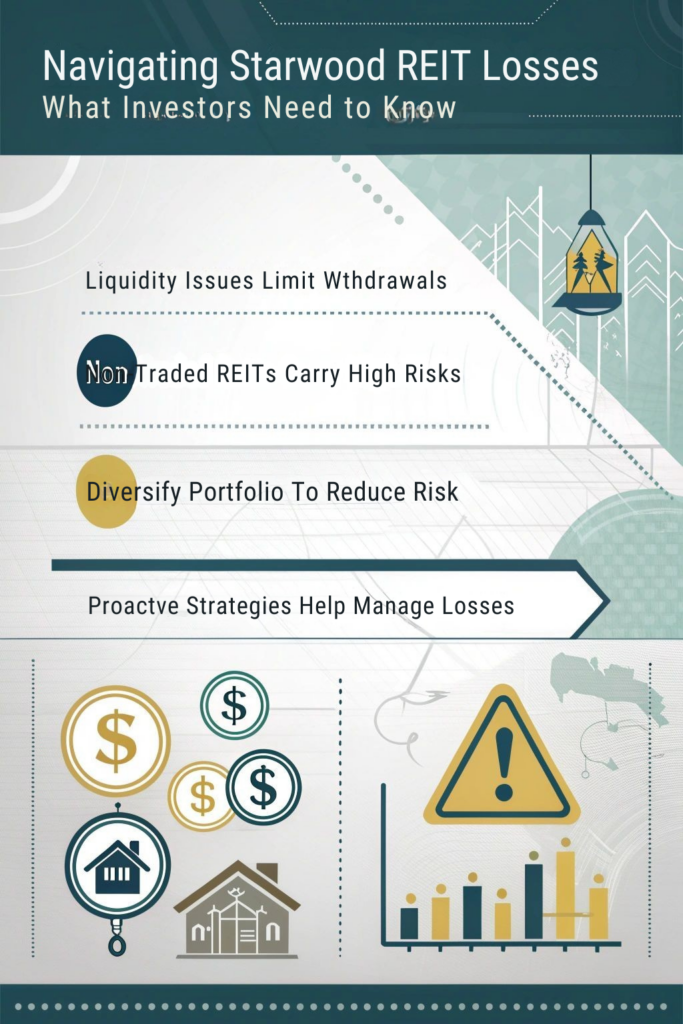
- Starwood REIT is struggling with liquidity issues and has limited how much money investors can withdraw. This situation makes it hard for investors to access their funds when needed.
- Investing in Starwood Real Estate Income Trust comes with high risks, including investment fraud. Share prices are unstable, and there’s a chance you might lose your investment.
- Investors should consider diversifying their portfolios to reduce risk associated with non-traded REITs like Starwood. They also need to stay updated on market trends and seek advice from financial advisors.
- Evaluating your investment strategy and being proactive can help manage losses in Starwood REIT investments. Itâs important to document experiences and possibly join investor groups for support.
- Facing longer holding periods is likely as Starwood REIT deals with increased withdrawal requests by using its credit line, signaling potential troubles ahead for accessing invested capital promptly.
Understanding Starwood REIT and Its Recent Challenges
We’ve seen Starwood REIT face some tough times lately. They’re dealing with cash flow problems and have had to put a cap on how much money investors can pull out.
Overview of Starwood Real Estate Income Trust (REIT)
Starwood Real Estate Income Trust, or Starwood REIT, faces significant challenges today. This non-traded REIT has recently dealt with redemption difficulties and share price instability.
It means we, as investors, might find it hard to get our money out when needed. The trust even had to use its credit line because of the high number of withdrawal requests from investors like us.
Investing in Starwood REIT involves a big risk due to these issues.
Our concerns grow as many fellow investors realize they have lost money years after putting it into this type of investment. The problems Starwood REIT is going through are not rare but highlight potential risks with non-traded REITs, including the chance of investment fraud within this sector.
Let’s dive deeper into these liquidity issues and what they mean for us.
Liquidity issues and redemption limitations
Starwood REIT faces serious liquidity issues that impact us as investors. Recent challenges include trouble with redeeming shares. These problems have forced the trust to tap into its credit line while dealing with withdrawal requests from many of us.
Investors now deal with long holding periods that limit access to our invested capital. The illiquidity of non-traded REITs like Starwood increases the risk we take on. Many of us may not even realize we’ve lost money in these investments until years later.
This situation raises concerns about possible investment fraud within this sector and questions about whether Starwood REIT is a good investment for our portfolios.
Risks Associated with Investing in Starwood REIT
Investing in Starwood REIT carries significant risks. Many investors find it hard to retrieve their money after investing. Liquidity issues and redemption limitations complicate matters.
Share prices can fluctuate wildly, creating instability for those who choose this path. We face potential long holding periods that limit access to our capital.
Starwood REIT has also tapped into its credit line recently due to increased withdrawal requests from investors. This action raises concerns about the trustworthiness of the investment.
The environment surrounding non-traded REITs like Starwood increases worries about possible investment fraud as well. Investors should stay informed while dealing with these uncertainties related to Starwood REIT tender opportunities.
Steps Investors Can Take to Address Losses
We need to take action regarding our Starwood REIT investments. Facing liquidity issues and redemption limitations, we must be proactive.
- Assess our investment strategy. We should evaluate how much we invested in Starwood REIT and determine if it aligns with our long-term financial goals.
- Review the current performance of Starwood REIT. Investigating how its share price has fluctuated gives us insight into potential recovery or further losses.
- Consult with a financial advisor. Getting expert advice helps us understand the factors associated with non-traded REITs, especially regarding risk management.
- Consider diversifying our portfolio. By investing in different asset classes, we can mitigate risks tied to any single investment, including illiquid assets like Starwood REIT.
- Stay informed about market trends and news related to Starwood REIT. Regularly checking for updates keeps us aware of any changes that may impact our investments.
- Explore options for withdrawal or redemption cautiously. We must keep in mind that requesting withdrawals now might face delays as Starwood REIT manages its liquidity challenges.
- Document our experiences with Starwood REIT carefully. Keeping track of our individual investment journey helps identify patterns in losses and successes over time.
- Join investor groups or forums focused on non-traded REITs. Connecting with others who share similar experiences allows us to exchange tips and support each other during this challenging time.
- Monitor financial health indicators closely for any signs of improvement at Starwood REIT since industry shifts can provide new opportunities for recovery.
- Prepare for longer holding periods ahead by adjusting our expectations regarding available capital from this investment as prolonged holding scenarios become more likely according to recent trends.
Conclusion
Starwood REIT faces significant challenges. Redemption difficulties and share price instability unsettle many investors. We discussed the risks associated with investing in non-traded REITs like Starwood.
Taking practical steps can help us address our losses effectively. Understanding these issues is crucial to protecting our investments in this sector.
For further insights, we can explore additional resources on Starwood REITs investor relations page. Each step we take now can improve our financial futures. Lets stay informed and proactive as we navigate through these troubled waters together!