

Haselkorn & Thibaut, P.A., operating as Investment Fraud Lawyers, has watched the cryptocurrency fraud landscape evolve from amateurish Ponzi schemes to sophisticated, multi-platform operations that steal hundreds of millions of dollars. Our partners are former Wall Street defense attorneys. They understand how securities fraud works at the institutional level — and they recognize that the same patterns of deception, obfuscation, and asset diversion that defined traditional brokerage fraud have been imported into the crypto industry at scale.
The numbers are grim. The FBI IC3 2025 report recorded $8.6 billion in total investment scam losses across all asset classes. Cryptocurrency-related fraud accounts for a growing share — and the true total is almost certainly higher, because many victims never report their losses.
The Major Categories of Cryptocurrency Fraud
Table of Contents
Cryptocurrency fraud takes several distinct forms. Understanding the method is the first step to recognizing and reporting it.
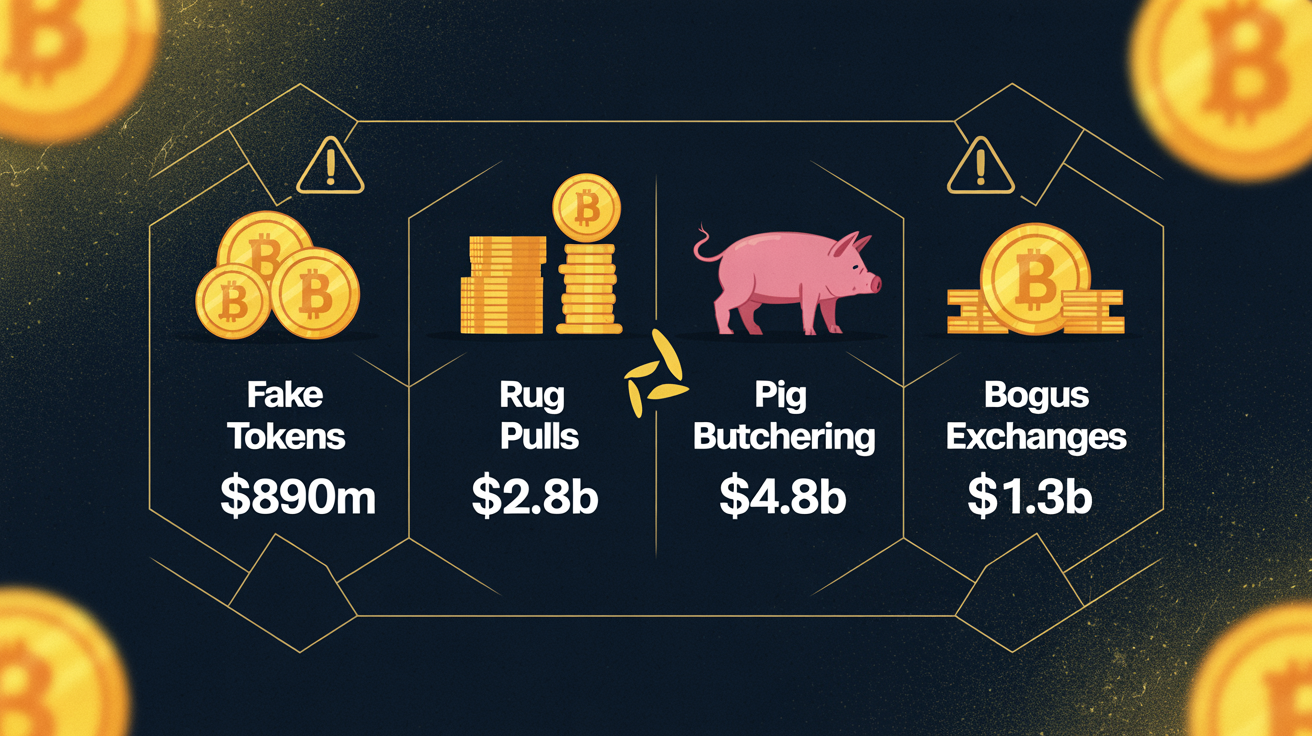
Pig-butchering schemes. The victim is contacted through a dating app, social media platform, or encrypted messaging service by someone who builds a personal relationship over weeks or months. That person then introduces a crypto investment opportunity — typically a fake trading platform controlled by the fraudsters. The victim deposits funds, sees fabricated gains, and invests more. When they try to withdraw, the platform demands additional fees, taxes, or deposits. The money is gone. The FBI estimates pig-butchering losses in the hundreds of millions annually, and Interpol has called it one of the fastest-growing fraud types worldwide.
Rug pulls. Developers launch a new token, generate hype through social media and crypto influencers, collect investor funds through a decentralized exchange or initial coin offering, and then drain the liquidity pool — leaving investors holding worthless tokens. The developers vanish. In 2025, rug pulls remained one of the most common forms of DeFi (decentralized finance) fraud.
Unregistered securities. Many crypto tokens are, in substance, investment contracts that should have been registered with the SEC (Securities and Exchange Commission) but were sold without registration or exemption. When the token issuer collapses, investors have no disclosure documents, no audited financials, and no recourse through traditional securities law mechanisms — unless they pursue an enforcement action through the SEC or a private claim.
Fake exchanges and wallets. Fraudsters create websites and mobile apps that mimic legitimate crypto exchanges. Victims deposit funds, see a fabricated balance, and cannot withdraw. In some cases, the fake exchange directs victims to download malware disguised as a wallet application, giving the fraudsters direct access to the victim’s legitimate crypto holdings.
Yield farming and staking scams. Promoters promise outsized returns — 50%, 100%, even 500% annual yields — for depositing crypto into a liquidity pool or staking contract. The returns are paid from new investor deposits, not genuine investment activity. These are Ponzi schemes dressed in crypto terminology.
SEC Enforcement Actions: Named Defendants and Dollar Impacts
The SEC has pursued cryptocurrency fraud enforcement at an accelerating pace. The following table summarizes recent actions with named entities and financial impact.
How Crypto Fraud Exploits Investor Psychology
| Enforcement action / case | Named defendants | Approximate investor losses / penalties | Fraud type |
|---|---|---|---|
| SEC v. Parmjit “Paul” Parmar | Parmjit “Paul” Parmar and co-conspirators | $212 million securities fraud conspiracy; $125 million+ restitution ordered (sentenced May 2026) | Securities fraud conspiracy involving false corporate acquisitions |
| SEC v. Vincent J. Camarda | Vincent J. Camarda | $160 million total investor losses | Investment fraud scheme (guilty plea April 2026) |
| SEC v. Safeguard Metals LLC | Jeffrey Santulan, Safeguard Metals | $51 million+ in consumer relief | Precious metals / alternative investment fraud targeting retirees |
| FinCEN broker-dealer AML penalty | Multiple institutions | $80 million penalty (record) | Inadequate anti-money-laundering compliance enabling crypto-facilitated fraud |
| SEC actions against DeFi platforms | Multiple issuers | Varies; cumulative enforcement in the hundreds of millions | Unregistered securities offerings, misrepresentation of yields |
Cryptocurrency fraud succeeds because it exploits three cognitive vulnerabilities.
Technological intimidation. Most investors do not understand blockchain technology, smart contracts, or DeFi protocols. Fraudsters use technical jargon and complexity as a shield against due diligence. The victim assumes that if they cannot understand the mechanism, it must be because they lack expertise — not because the mechanism is fraudulent.
FOMO and social proof. Crypto fraud thrives on fear of missing out. Social media posts, influencer endorsements, and online forums create the appearance of widespread adoption and profit. The victim sees others claiming enormous returns and feels pressured to act quickly before the opportunity disappears. In reality, many of the social proof signals are manufactured — paid promoters, fake accounts, and bot-driven engagement.
Trust in platform design. Many fraudulent platforms are visually polished. They look like legitimate exchanges. They display real-time (fabricated) pricing data. They produce fake account statements showing impressive gains. The visual presentation creates a false sense of security.
The Role of Influencers and Promoters
A growing number of SEC enforcement actions target social media influencers and paid promoters who touted crypto investments without disclosing compensation. The SEC’s 2022-2026 enforcement sweep against celebrity and influencer promoters has resulted in settlements with well-known figures across finance, sports, and entertainment. The common fact pattern: a promoter was paid to promote a token, did not disclose the payment, and the token’s value collapsed after the promotion ended.
Investors who relied on these endorsements lost money. The promoters kept the fees. The token issuers walked away with the proceeds of the pump.
FINRA Arbitration and Crypto Claims
Investors who lost money through a broker-dealer that recommended cryptocurrencies or crypto-related products — such as Bitcoin ETFs, crypto mining stocks, or digital asset funds — may have a FINRA arbitration claim. Suitability violations are common in these cases. A broker who recommended a highly volatile, speculative crypto asset to a retiree with a conservative risk profile may have violated FINRA Rule 2111 (Suitability) and Regulation Best Interest.
Investors who purchased crypto directly on an unregulated exchange, however, generally cannot pursue a FINRA arbitration claim because no broker-dealer was involved. In those cases, the primary recourse is an SEC enforcement action (which may result in a distribution fund) or a private civil lawsuit.
Data: Crypto Fraud Losses and Enforcement Trends
Steps Investors Should Take If They Suspect Crypto Fraud
| Metric | 2024 | 2025 | Trend |
|---|---|---|---|
| Total investment fraud losses (FBI IC3, all types) | $5.7 billion | $8.6 billion | Up 51% YoY |
| Elder-specific investment fraud losses (ages 60+) | $3.4 billion (est.) | $4.5 billion+ | Up approx. 32% YoY |
| SEC crypto-related enforcement actions filed | 30+ | 40+ (projected) | Increasing |
| FINRA crypto-related arbitration filings | 200+ | Increasing | Growing investor awareness |
| Average pig-butchering loss per victim | $100,000 – $200,000 | Rising | Sophistication increasing |
Stop communicating with the promoter or platform. Do not send additional funds, regardless of promises or threats. Many scammers demand “tax payments,” “withdrawal fees,” or “insurance deposits” before releasing funds — these are always fraudulent.
Preserve all documentation. Screenshots of the platform, email correspondence, text messages, bank statements, and wallet addresses should be saved immediately. These records are essential for any enforcement action or arbitration claim.
Report to multiple authorities. File a complaint with the SEC (sec.gov/tcr), the CFTC (cftc.gov/complaint), the FBI IC3 (ic3.gov), and the relevant state securities regulator. Multiple agencies share information, and coordinated reporting increases the likelihood of enforcement.
Contact an attorney experienced in securities arbitration. Time limits apply. FINRA arbitration claims must generally be filed within six years of the event. State and federal securities laws have shorter statutes of limitations — typically two to four years from discovery.
Our Firm’s Approach to Crypto Fraud Recovery
We evaluate every crypto fraud case individually. Our initial consultation is free and confidential. We assess whether the investor has a viable FINRA arbitration claim (if a broker-dealer was involved), a potential SEC whistleblower claim, or a private right of action under state or federal securities law.
Because our partners defended financial institutions for decades, we understand how brokerages document crypto recommendations, what suitability analyses they claim to perform, and how they defend against unsuitability claims. That knowledge informs every claim we build.
We handle all cases on a contingency basis. If we do not recover funds, the client owes nothing. Contact our office at 1-888-885-7162 to discuss your situation. The initial consultation is confidential, and there is no obligation to proceed.